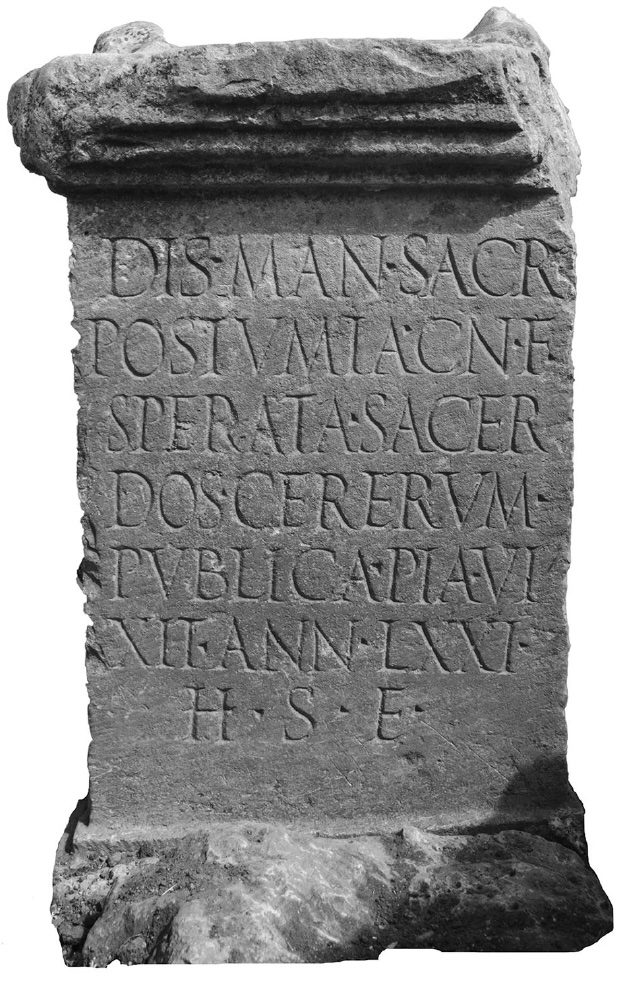
A legionary is granted Roman citizenship after 25 years of service. Curses inscribed on a small lead tablet. A milestone indicates the distance remaining to Augsburg. Such insights into everyday Roman life have been handed down to us in inscriptions that have survived to this day.
Anne Kolb, Professor of Ancient History at the University of Zurich (UZH), is in charge of the Epigraphic Database of the Roman World (EDCS), which has been digitally cataloguing Latin inscriptions from the Roman Empire for around 40 years. The database now contains over 540,000 entries and is used extensively, primarily by an international specialist audience. In 2025, the EDCS was transferred from Eichstätt-Ingolstadt to the University of Zurich, where it is currently undergoing further technical development.
The Vox Lapidum project, funded in the 5th project call, builds on this. The aim is to present the database’s content in such a way that it becomes accessible not only to researchers but also to a wider, non-specialist audience. A conversational interface and AI-supported functions are designed to help users not only find inscriptions but also place them within their historical context.
Tombstone: Dis Man(ibvs) sacr(vm) Postumia Cn(aei) f(ilia) Sperata sacerdos Cererum publica pia vixit ann(is) LXXI hic sita est. Translation: Dedicated to the spirits of the dead. Postumia Sperata, daughter of Gnaeus, public priestess of Ceres, devout, lived to the age of 71. Here she lies buried. EDCS-00000008